For over a century, from Bull’s pioneering role in early computing to its leadership in AI, quantum computing and high‑performance computing, innovation has been a constant driver. Building on deep engineering expertise and a unique heritage, Bull continues to shape the future of Advanced Computing and AI with trusted, sovereign, forward‑looking solutions.
To exploit the patents for statistical machines registered by the Norwegian engineer Fredrik Rosing Bull (1882-1925) in the 1920s, the company “H.W. Egli-Bull, a subsidiary of the Swiss company H.W. EGLI, was founded in France in 1931, offering a potentially larger market than in Switzerland.
Based in central Paris, the company specialised in the manufacture of tabulators, punched card sorters and punching machines, which were constantly being improved to the great satisfaction of their users.
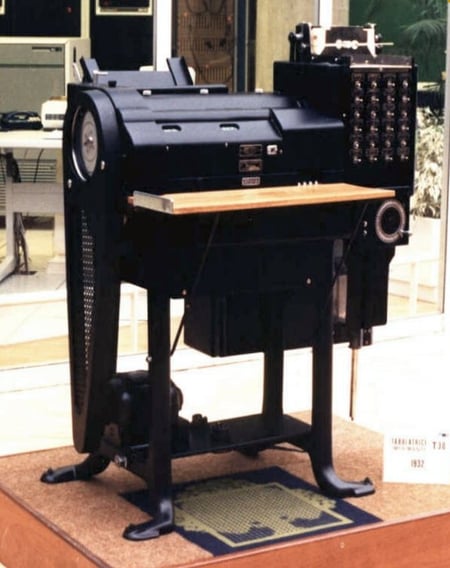
The T30 tabulator was the first machine to leave Paris’ workshops. It was equipped with an innovative printing device based on a wheel system, allowing numeric and alphanumeric characters to be printed faster than its competitors. Bull’s pioneering spirit, the innovative nature of its activities and the financial support of the French “Syndicat des Utilisants” and later of the Calliès-Aussedat family contributed to its success against its main competitors: IBM and Remington Rand.
In 1935, with a fleet of more than 60 pieces of equipment installed – including the T30 and T50 tabulators which featured the fastest printing system on the market, protected by a patent that enabled the company to maintain this advantage – the Group experienced significant growth and expanded its activities internationally. During the German occupation, Bull became the first supplier of mechanography to the National Statistics Service (SNS), the predecessor of INSEE. In 1948, Bull overtook IBM in the French market.


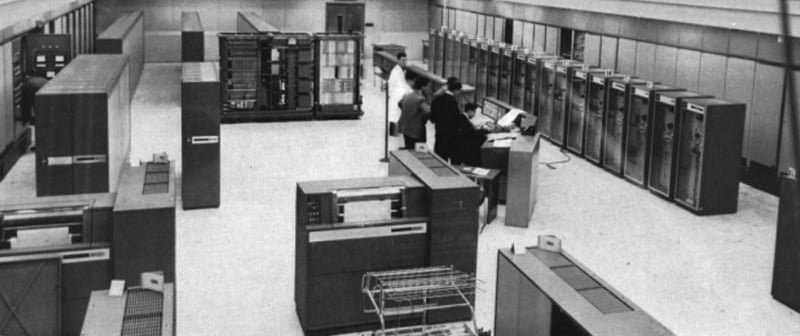
Gamma 60 located at Gare d’Auteuil in Paris (1960 to 1966)
In the early 1950s, the introduction of the first Gamma 3 electronic computer, using electronic tubes, marked Bull’s shift from traditional mechanography to electromechanics. Building on the success of its earlier Gamma computers, Bull embarked on the design of a new generation computer in the mid-1950s: the Gamma 60, the first multi-processor and multi-task computer. Transistors replaced electronic tubes, drums or ferrite-core memories were used as working memory and tape drives served as mass memory.
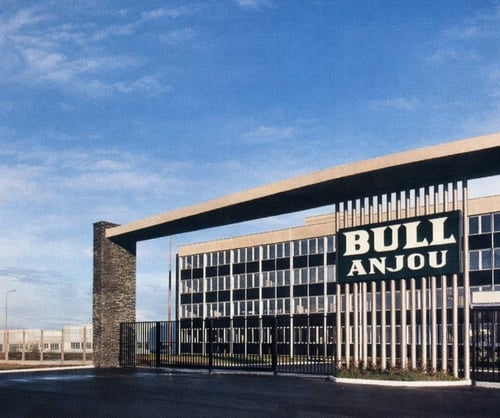
Following the Gamma 30, the Gamma 60 was manufactured in the Group’s most advanced facility, the new factory in Angers. Its design required significant financial investment in research and development, and its release to the market was delayed: Bull soon found itself facing financial difficulties.
In the absence of a national solution to maintain a French computer industry, Bull and the American company General Electric joined forces. An agreement, approved by the public authorities in May 1964, enabled the rescue of Bull, which became a holding company overseeing three subsidiaries: the industrial company Bull-General Electric (SIBGE), the company Bull-General Electric (BGE) and the commercial promotion company Bull (PCB).
Following the takeover of Bull, French IT became almost non-existent. The French state therefore launched the “Plan Calcul” in 1966 with the creation of the “information delegation”, in order to preserve a national IT industry, meeting the needs for national defense and securing technological independence from the United States.

Factory of Angers in the 1960s | © DR / Archives of Saint-Gobain
As a result, several companies were created: the “Compagnie Internationale pour l’Informatique” (CII), the « Société anonyme de systèmes et périphériques associés aux calculateurs » (Sperac) and the « Société européenne de semi-conducteurs et micro-électronique » (Sescosem), along with a public research institution: Iria (now Inria).
In 1967, CII designed and produced its first computer, the Iris 50, followed in 1969 by its most powerful machine, the Iris 80.
In the early 1960s, Bull inaugurated its new factory in Angers, where it continued to advance the design of multi-tasking and multi-processor computers.

Iris 80
In 1970, the American company Honeywell Inc. acquired Bull-GE, renaming it Honeywell-Bull and making it its main subsidiary. Five years later, it merged with “Compagnie Internationale de l’Informatique” (CII) and took the name CII-Honeywell-Bull.
From 1975, Bull entered a period of strong growth, mainly due to company acquisitions and mergers. However, these mergers sparked significant political debate, as some considered them contrary to the technological independence initially advocated by the French IT company.
The Group also faced the challenge of defining a common identity and establishing a coherent strategy for products originating from Honeywell Systems, Honeywell Bull, Bull-GE and CII.
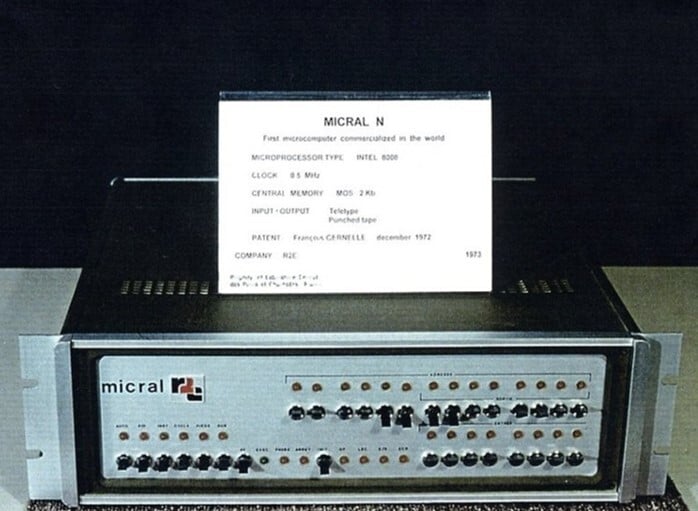
To align the product lines, the “Unisys programme” was launched in 1976. In 1978, CII-HB acquired a 60% controlling stake in the French company R2E, which had developed Micral, the first microcomputer based on a microprocessor.
Micral N (1973), the first microcomputer

CII-Honeywell-Bull was nationalised in 1982 by the French government and took the name “Bull Group”, a choice that reflected its heritage and affirmed the company’s singularity. Jacques Stern, founder and former CEO of the “Société d’études des systèmes d’automation”, was appointed head of the company.
In 1987, NEC, Honeywell and Bull created the subsidiary Honeywell Bull Inc., renamed Bull HN two years later when Bull took control, holding 65.1% of the share capital. Twenty-five years after its establishment, the Angers factory had become the largest computer manufacturing centre in Europe and Bull was the leading European computer manufacturer, with 45,000 employees.
The reconquest of the international market in 1989 came about through the acquisition of Zenith’s IT activities, a major American manufacturer of laptop computers, and through two large-scale technical and commercial agreements with IBM in 1992 and then Packard-Bell in 1993.
Bull subsequently consolidated its position as a global player, with more than 60% of its business generated abroad, and regained competitiveness by marketing products that better matched market requirements, such as the Bull Questar and Bull Micral ranges, as well as its large systems offering (Bull DPS 7000 and 9000).
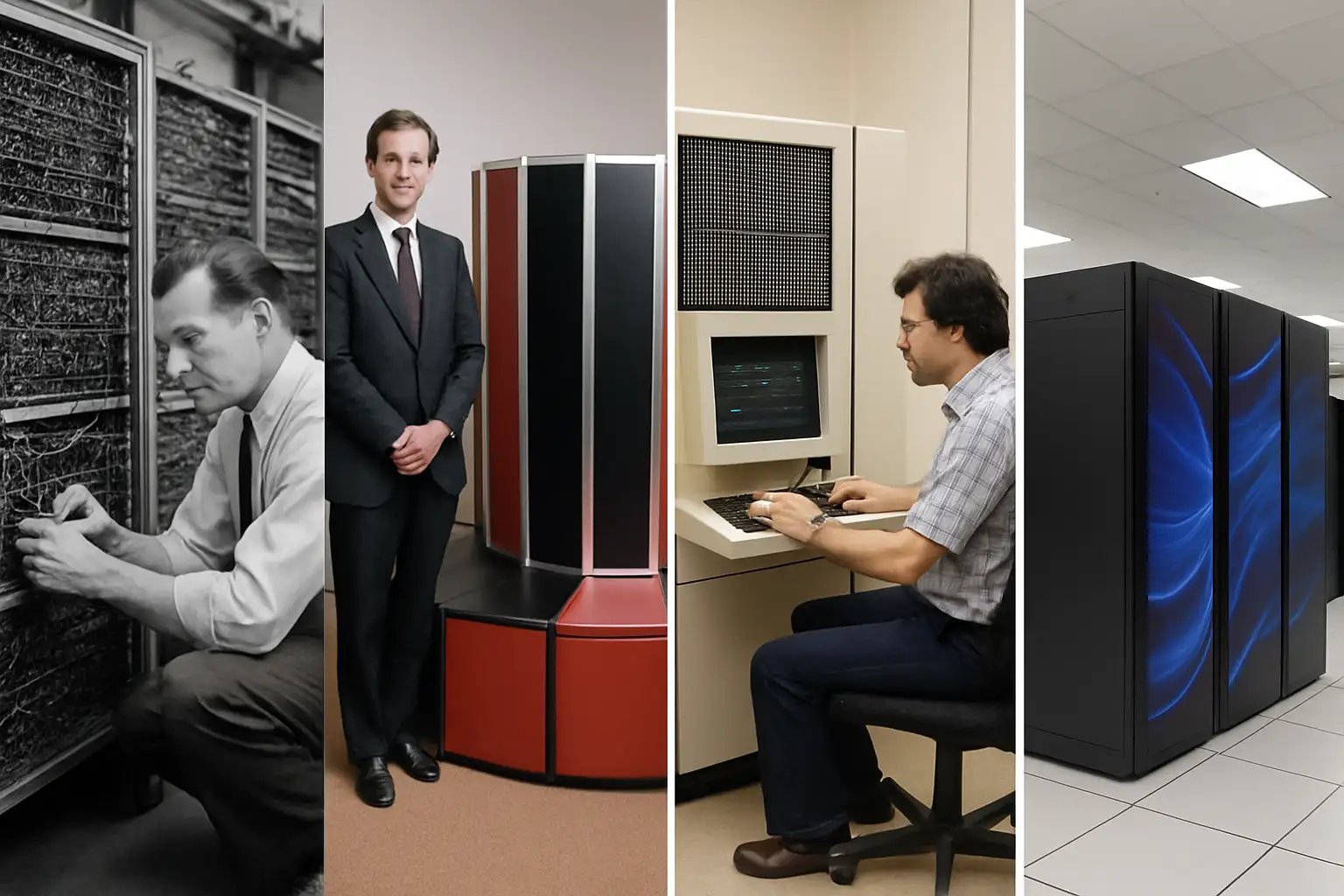
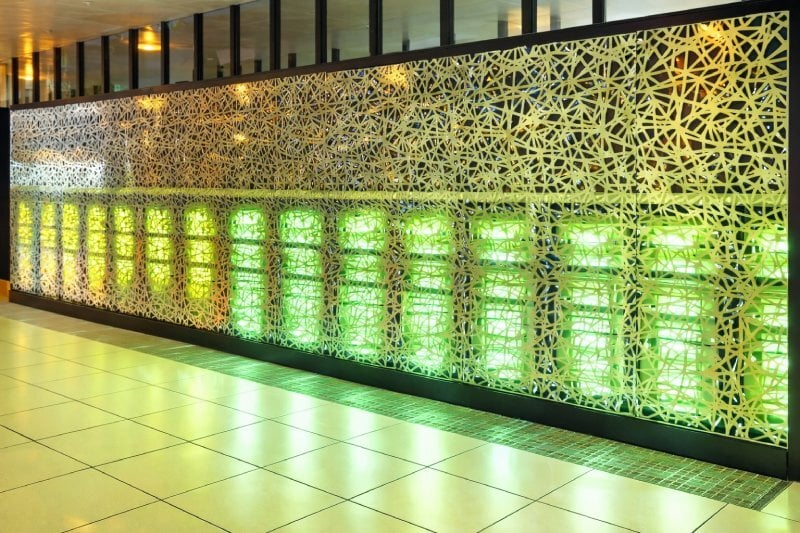
In the 2000s, Bull made a major investment in the field of supercomputing, becoming the leading manufacturer in the industry. This included the production of CURIE (see photo), which became the most powerful European computer of its time, capable of performing two million billion operations per second.

Supercomputer CURIE
By joining the Atos group in 2014, Bull definitively entered the pre-exascale HPC market, especially through announcements relating to supercomputers. From 2015 to 2020, almost one machine per year were announced, including the BullSequana (2016) and JUWELS (2020), which achieved computing powers of 25 and 44.1 petaFlops respectively.
In 2022, the BullSequana XH3000, its new “exascale-class” hybrid supercomputer, was unveiled. Designed and manufactured in Angers to meet the demanding requirements of intensive computing in field such as energy, health and geology, the BullSequana XH3000 is recognised as one of the most powerful and energy-efficient supercomputers in the world, delivering computing power designed to exceed ExaFlops (a billion billion operations per second).